Staking Stablecoins — Assessing the Economic Security of Stablecoin Collateral in Restaking
In this research blog, we examine the role that stablecoins, like USDC, can play in supporting cryptoeconomic security within restaking.
In this research blog, we examine the role that stablecoins, like USDC, can play in supporting cryptoeconomic security within restaking.

In this research post, we suggest a comprehensive framework for evaluating collateral health in the context of restaking protocols and Actively Validated Services (AVSs). We explore how the market value of collateral ties into the economic security of an AVS network, focusing on ETH/ETH-backed collateral and non-ETH-backed collateral. By measuring collateral risk for a given AVS-collateral pair, we assess which collateral assets pose higher risks for AVSs in the current market.
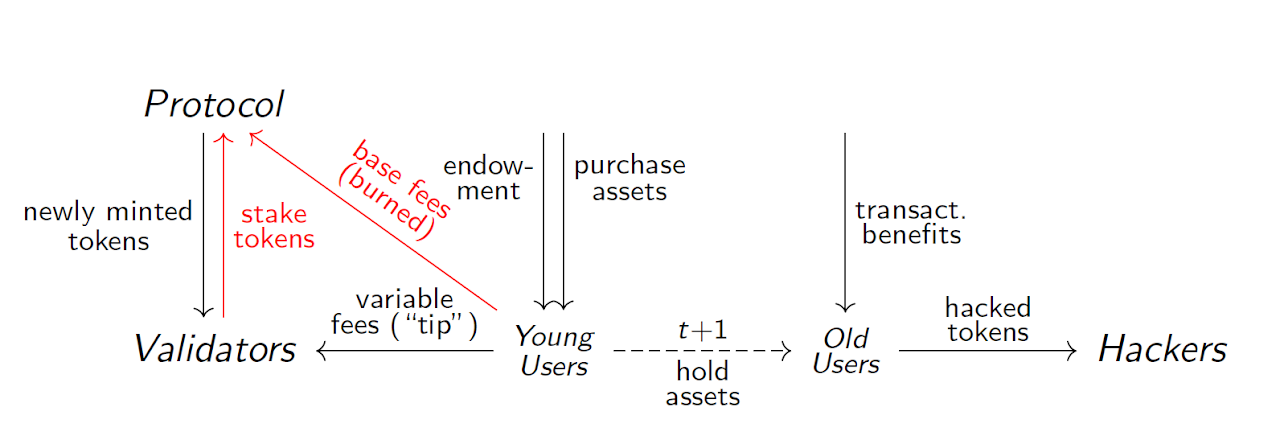
This research project applies dynamic stochastic general equilibrium methods to model and optimize crypto policies for staking and burning. My goal is to provide insights for designing a cryptoeconomic system that self-regulates without requiring governance power.
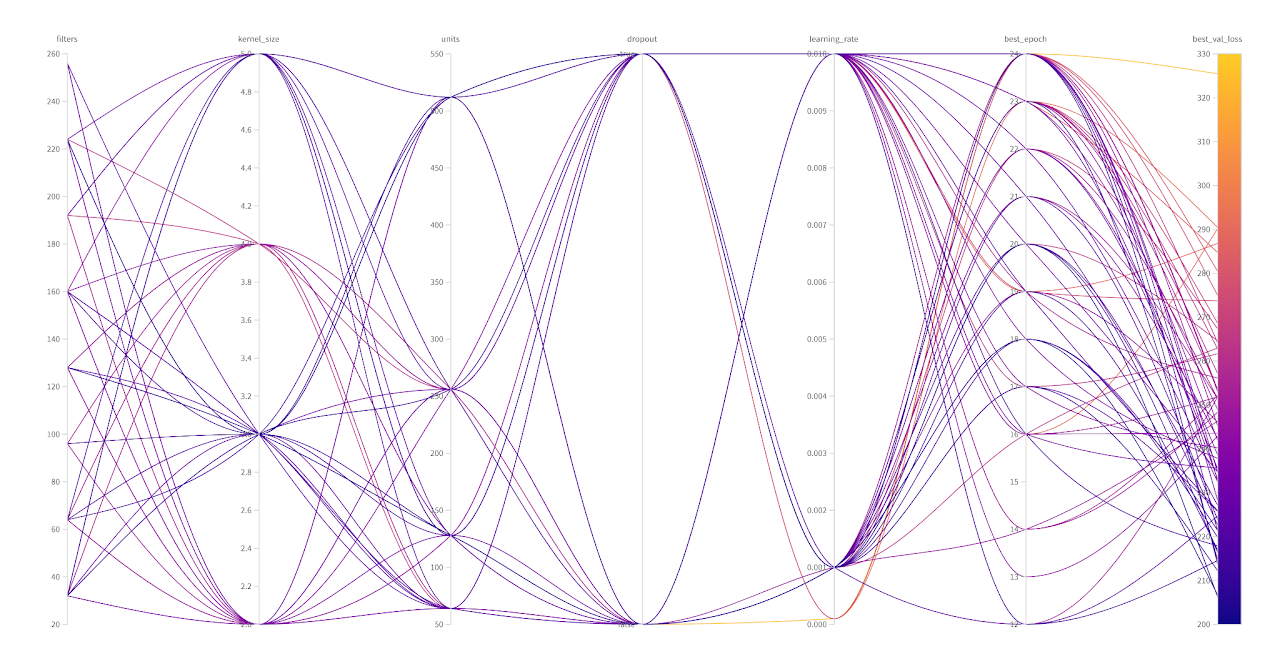
Current NFT-Fi applications face bottlenecks because it is extremely difficult to price NFT collaterals fairly and accurately. In this paper, I showed that this issue can be solved via deep learning and ZKPs.
I trained a convolutional neural network based on historical trades, market trends, and traits/rarity data of BAYC NFTs (sourced from Dune and OpenSea). Then I proposed an application framework using zkML techniques to provide a fully trustless price prediction oracle for NFTs in any onchain collection.
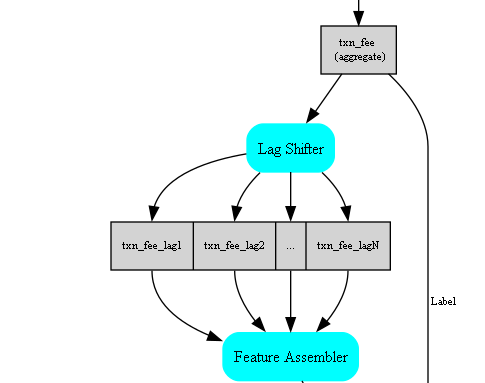
I built a time series machine learning pipeline for Ethereum transactions fees. I was able to analyze a large set of data (~500 million raw transactions) by leveraging the processing power of AWS EMR clusters and an efficient Spark framework.
The end-to-end pipeline consists of custom wrappers built on Spark ML’s transformer class. I wrote custom functions for train-test-splitting and hyperparameter tuning and got significant improvements in forecast accuracy over the baseline model.
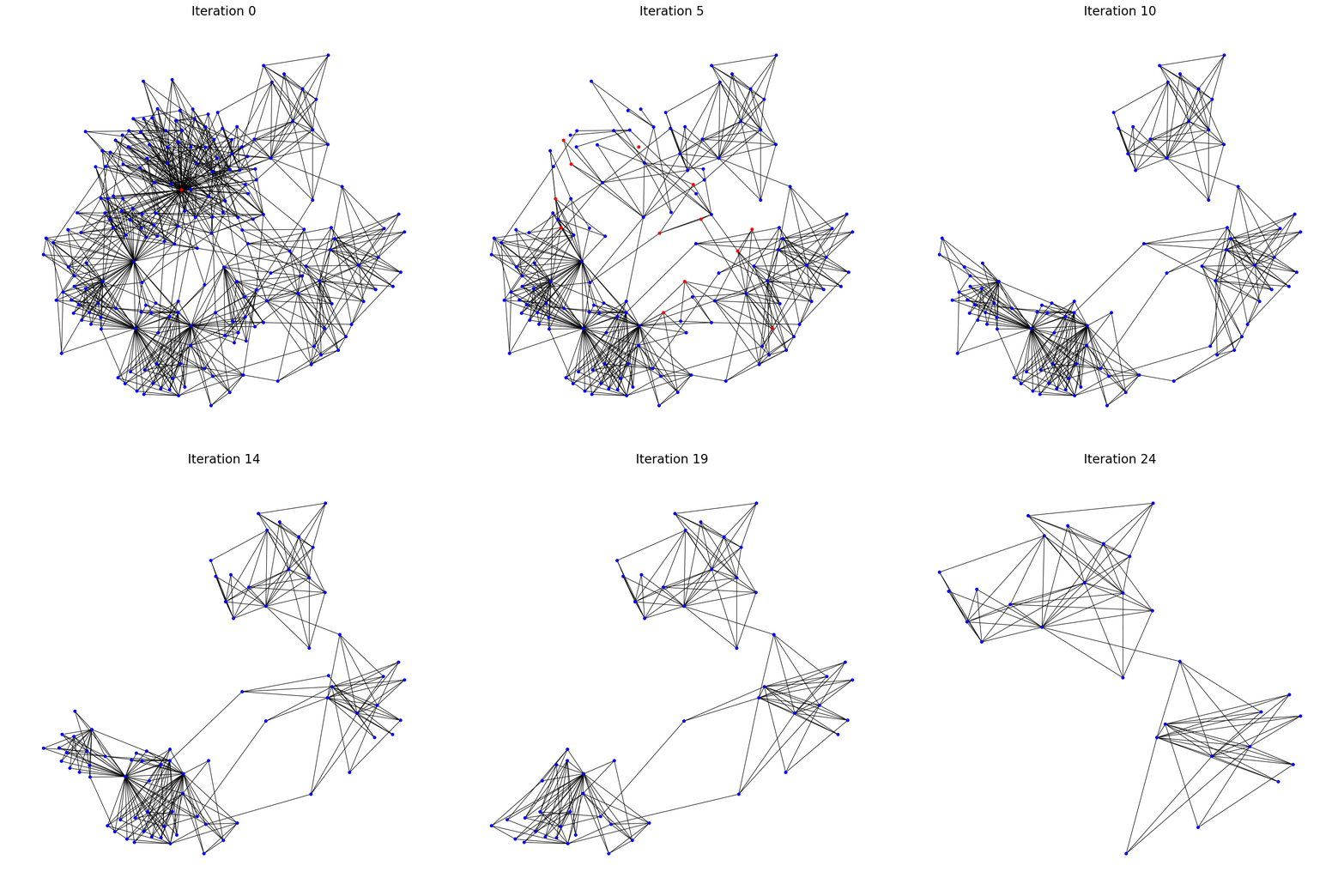
How did we selfish humans learn to cooperate and form stable social structures? What happens if some of us don’t cooperate?
I led a student research group to study the phenomenon of network cascading failures induced by agents’ failure to cooperate in the Prisoner’s dilemma game. We studied how network topology and evolutionary parameters affect cooperative behaviors.
My main contributions include designing and developing multi-agent systems in Python using networkx; conduct controlled experiments using computer simulations; analyzed and visualized data with pandas.
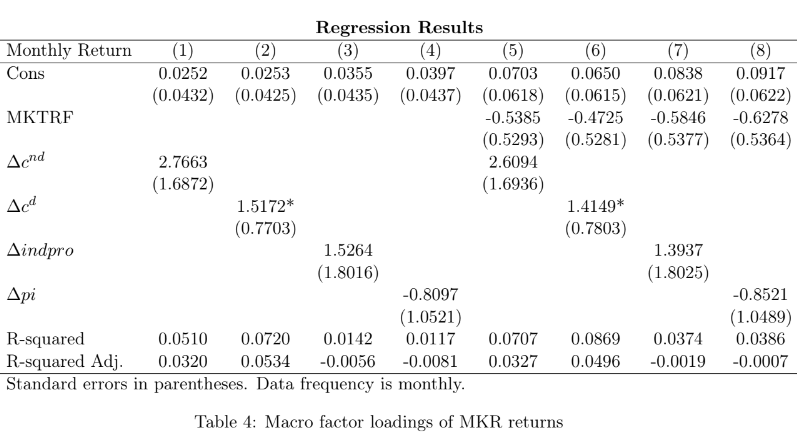
I took a quantitative research approach adopted from Liu and Tsyvinski (2021) to study MKR returns on different time scales.
I analyzed the predictive power of various factors including other crypto, momentum, macro indicators, Internet search trends, and network fundamentals. Then I discussed an effective trading strategy using a combination of technical and fundamental signals.
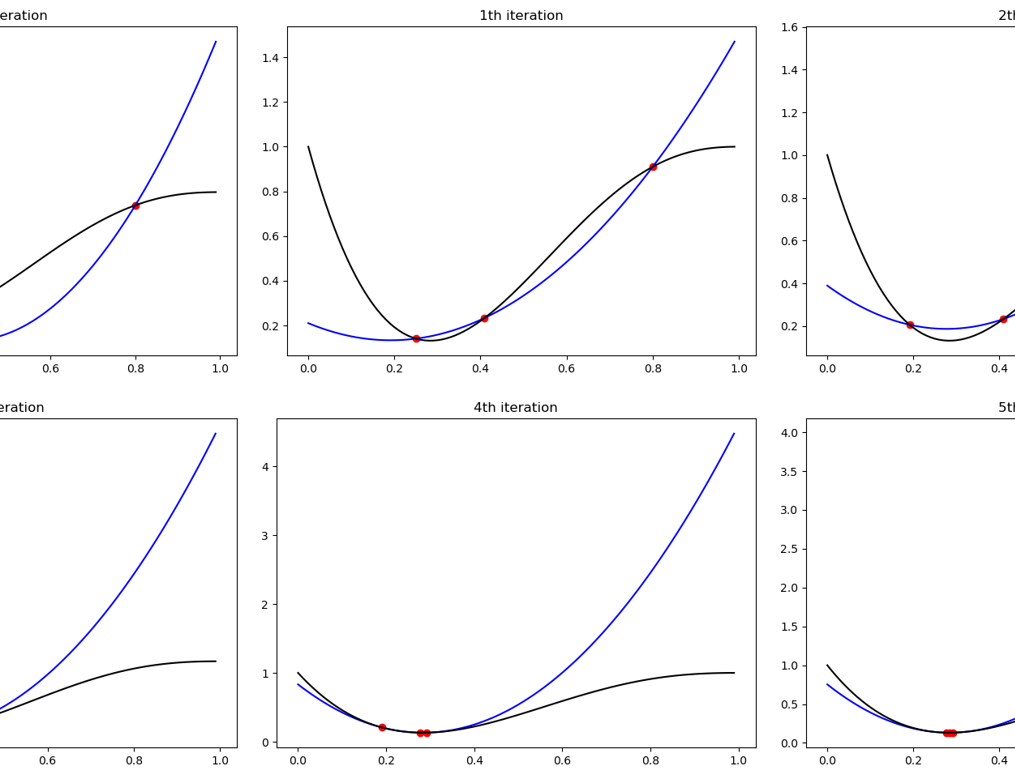
I wrote from scratch a Python package containing 18 numerical algorithms for root finding, matrix decomposition, interpolation, and optimization.
Then I studied the gradient descent algorithm from a numerical analysis perspective. Highlight: an independent proof for the existence of an optimal step size under the Wolfe conditions.
I illustrated my gradient descent algorithm with constrained utility maximization problems with the Lagrange multiplier method.
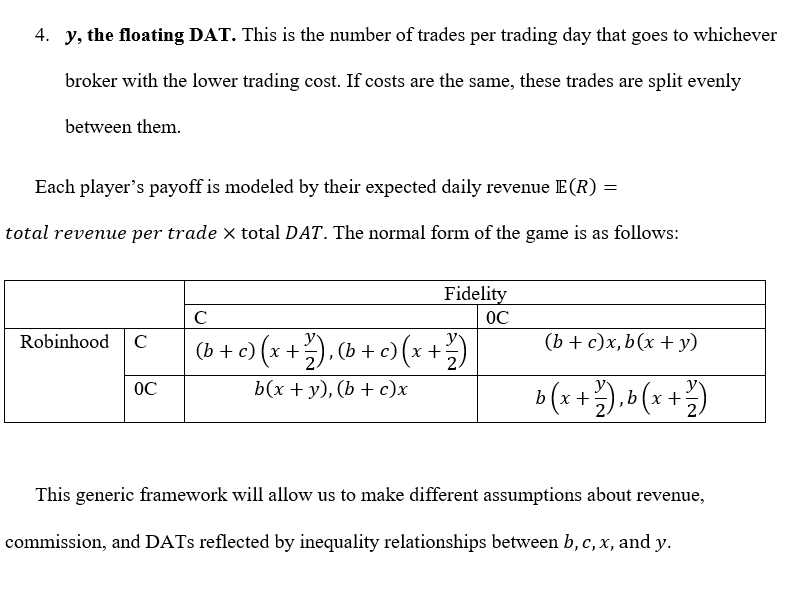
I proposed three game-theoretic models for the strategic interactions in the zero-commissions war among major U.S. stock brokerages:
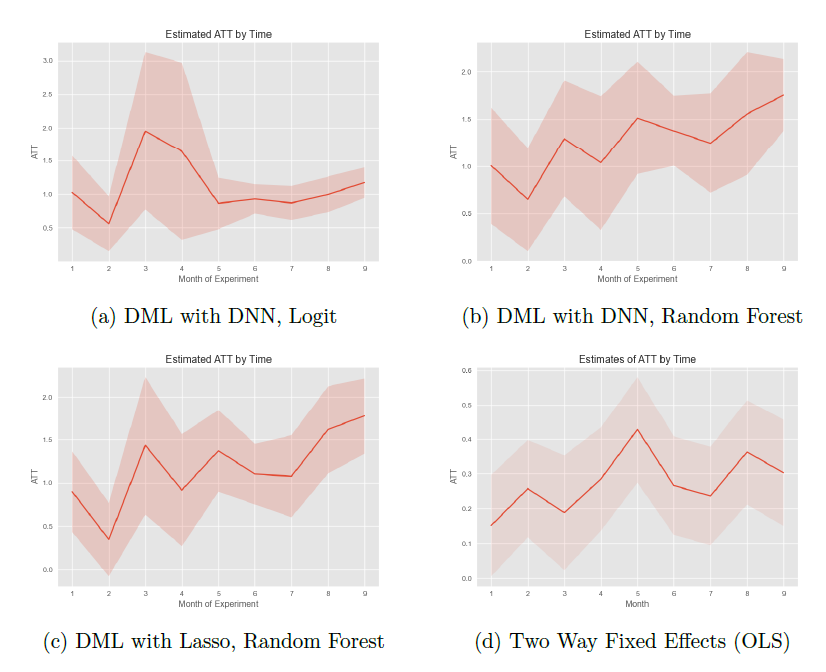
We analyzed the effects of WFH on labor productivity from a previous field experiment with selection bias.
We used double machine learning (DML) models to estimate heterogeneous treatment effects across time. Our results suggested that that WFH has a significant positive effect on those who self-select into it, and supported hybrid or optional WFH policies.
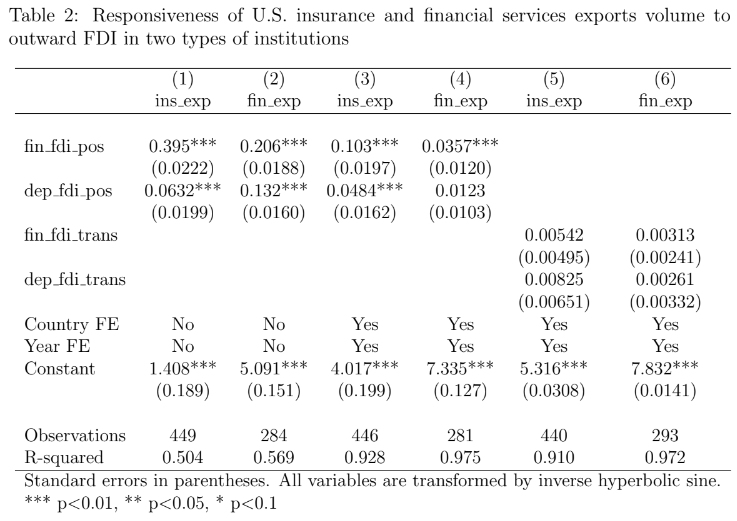
I studied the relationship between outward foreign direct investment (FDI) and services export using data from the U.S. financial sector.
I used macro-level data with a panel regression model and found that the volume of U.S. financial and insurance services export to a country respond positively to U.S. FDI in that country’s financial sector.
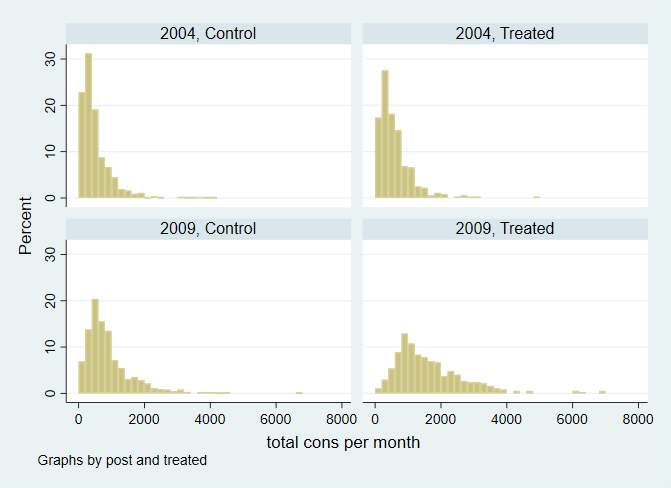
In this study, I evaluated the impact of the Rural Financial Intermediation Programme (RUFIP) on key financial outcomes of poor households in rural Ethiopia.
Exploiting a time difference between which savings and credit cooperative unions (SCCUs) were established under RUFIP, I constructed a difference-in-differences empirical model, controlling for household fixed effects.
As the final project in Blockbeam’s Gateway to DeFi program, my team took a deep dive into the Uniswap protocol including its history, tokenomics, competitors, key metrics, risk factors.
We worked with the research team at Coin Metrics and used their data. Our pitch for a bullish thesis on UNI won 3rd place in the pitch competition on closing night.
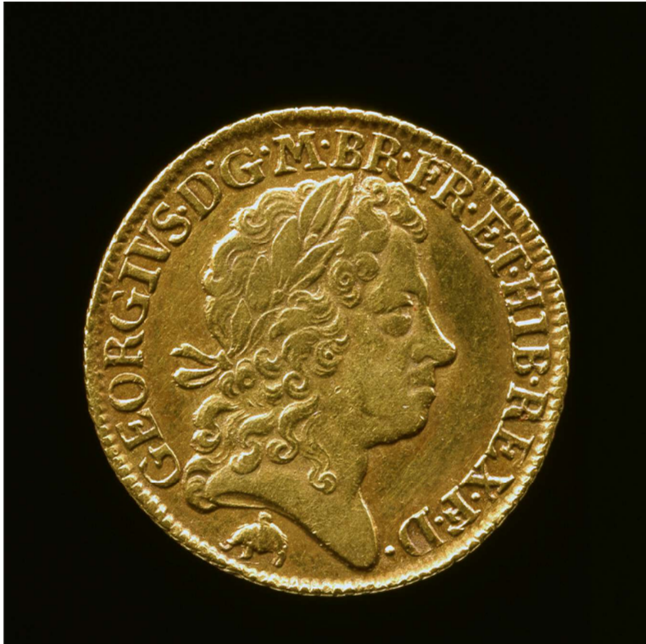
I studied the role of paper vs. metal currencies in 15-18th century Britain and China, then discussed implications for modern day monetary policies and digital currencies. Presented with a Scalar webpage.